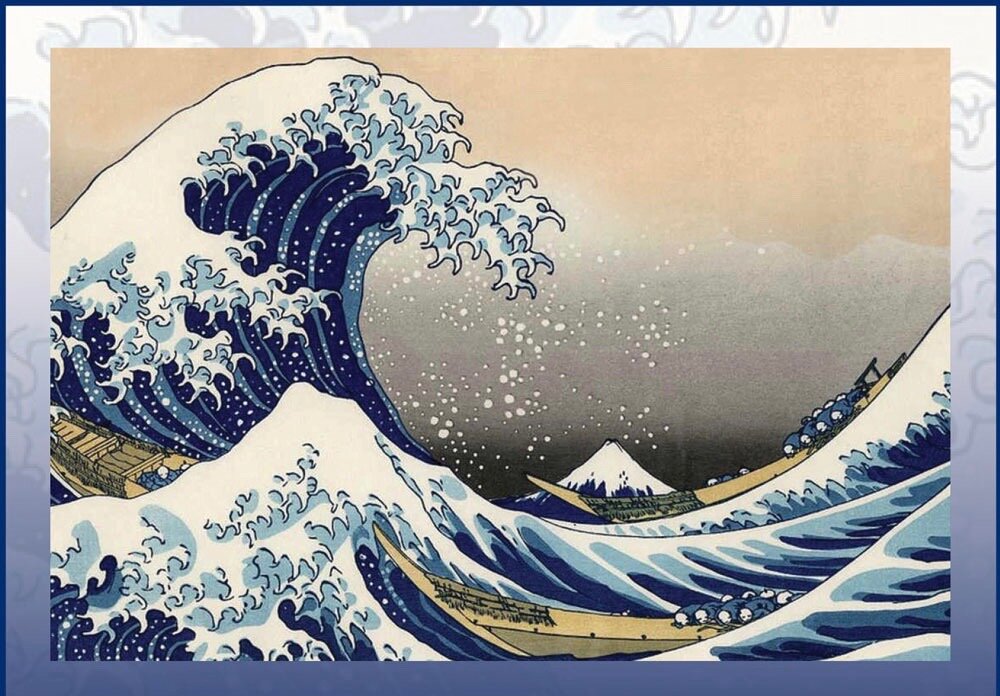

Our minds are as changeable as the wind. As we meditate the mind can become distracted - sometimes frequently, sometimes only occasionally. Other times we are clear and able to concentrate. Sometimes there are roiling thoughts or sadness or sleepiness or restlessness. Sometimes we doubt our own ability to meditate, doubt the teachings and the teachers we have been following.
These waves of distraction or preoccupation can occur over weeks or months as well as minute by minute. Meditation teachers will occasionally talk about having to take a break from meditation for a period of time. Others might talk about bringing new practices, new insights into their practices.
Whether the waves of change are long and gentle or whether they are short and choppy, the one thing we can count on is that our practice, our minds, our hearts, how we perceive the world and who we are in it, will shift and change. Part of our faith in practice is that mindfulness can meet this moment, and this moment, and this moment.
But life has a way of changing in a heart beat. What was normal yesterday is impossible to find today. And sometimes we need to find refuge from these changing storms.
Browsing through meditation offerings I receive daily, I noticed one on devotion with Young Oh and Cara Lai. It was a magnet pull for me and I signed up. I may have mentioned this.
In the first class, they taught the three refuges of Buddha, Dharma, and Sangha. I offered them two weeks ago in this space. These refuges are often practiced in the form of a chant - a chant that opens a retreat, that opens the day. Often they are paired with the precepts so that the beginning of a retreat is marked by the three refuges and a re-dedication to ethical practice - to not killing or causing harm, not stealing or taking what is not freely offered, not lying or speaking untruthfully, not misusing sexual energies (on retreat, this is broadened to not engaging in any sexual activity), and to not using substances that cloud or dull the mind.
When we suffer, the beginnings of release from suffering are often found in movement toward virtue or movement toward the path. Somehow, somewhere in the darkness of our suffering mind, a thought or feeling, something ineffable, moves us to take a step toward the virtuous or toward some other element of the path. We recite the refuges and precepts frequently on retreat so that these become a familiar pathway and more readily available to us when we are caught in confusion.
When we chant them, we chant them three times. I go to the Buddha…dharma…sangha for refuge….For a second time, I go to the Buddha…dharma…sangha for refuge. For a third time, I go to the Buddha…dharma…sangha for refuge.
What is the importance of saying it three times… Of saying “for a second time..” and “for a their time…”
I recite the refuges to myself on retreat whenever I enter the meditation hall. And when I enter the meditation hall, it is often for a second or third time. I am returning to this place for refuge, this retreat, this hall…I am returning to my practice again and again… Practice is a process of continually starting over. So each time we go for refuge, we are acknowledging that we go for refuge, not just once or twice or three times, but we go for refuge over and over again. It is part of our lives and practice to go for refuge.
What am I taking refuge in?
When I seek refuge in the Buddha, I may be thinking of the historical Buddha who left home and family in search of an answer to the problem of old age, sickness, and death, or I may be thinking of what the Buddha represents in the world, the idea of freedom from suffering, or I may be thinking of my own Buddha nature, that there is that of the Buddha in me. The Buddha told his followers, if I can find freedom from suffering, so can you. We all have Buddha nature - the desire and the capacity to find freedom from the endless round of samsara, cycles of birth, death, and rebirth, suffering, ease, and more suffering.
When I go to the dharma for refuge, I go to the teachings of the Buddha for refuge. I seek a story or parable or example given by the Buddha how to understand this world. But Dharma has two meanings - the teachings and also the way things are. So I may be seeking refuge in the way things are. Perhaps this is a way of seeing that the world turns according to its own laws. I do not control events. Even the events that flow through me are products of the causes and conditions that came before. So I understand by seeking refuge in the dharma that I am recognizing that I am not in control, that there is no force of “me-ness” in me that directs the world, that I may be responsible for my actions but I am not the sole architect of them.
When I go to the sangha for refuge, I turn to my fellow practitioners for support. I am able to sit through this next meditation because 31 or 95 other people in the room are contributing their energy to the silence and stillness of this time. When I am in pain, the sangha may comfort me - they too know pain, restlessness, anxiety, aversion, greed, confusion, guilt. Or joy, happiness, tranquillity, peace. Whatever it is, I am not alone in these feelings, these occurrences. Whether it’s illness, aging, the death of family member or friend, or one’s own pending death, the sangha has experienced it. And sometimes the greatest comfort is to be with people who have been where you’ve been and are not afraid to sit with you in it.
Yong Oh who was the lead teacher in this devotion course said, 'When we go for refuge, we are asking for help to be with what is.' Being with the present moment is the heart of the practice. And the present moment is both totally ordinary and totally extraordinary. Sometimes its extraordinariness compels us to wonder with astonishment that we are alive, this moment is here, the world is like is it. Other times the present moment is just as real and mysterious but also heartrendingly painful. How can this be? What are these vulnerable bodies we inhabit? And what inhabits them? We as mortal beings sometimes need help from inner resources and also from outer resources - friends, family, groups, and sometimes from spiritual friends, leaders, teachers, and monks. Sometimes those who engage their entire lives in lifting up what is sacred in our world are just the ones who can offer the solace and support we yearn for.
When we go for refuge, we bow our heads and surrender, asking whatever wonder and mystery surrounds us to help us simply be and be with.